

XPRIZE TESTING PARTNER · HEALTHSPAN COMPETITION
Systemic chronic inflammation finally has a validated measure. One you can run.
Edifice Health provides iAge®, a prespecified immune aging biomarker for the XPRIZE Healthspan Finals. This page is for participating teams and research partners who need inflammation endpoints for their own studies.
Why single inflammatory markers were not enough
Systemic chronic inflammation accumulates over decades and drives the muscular, cognitive and immune decline this competition exists to reverse. It has had no standard biomarker.
Single markers such as hs-CRP, IL-6 and TNF are heavily confounded by illness and non-immune processes. A 2026 Nature Medicine consensus judged them inadequate to capture immune fitness.
A single score, derived at Stanford
iAge® integrates multiple circulating inflammatory proteins into a single score that is associated with multimorbidity, frailty, immunosenescence and all-cause mortality.
It was derived from the Stanford 1,000 Immunomes Project by David Furman and Mark M. Davis, and published in Nature Aging. It is a prespecified immune aging biomarker for the XPRIZE Healthspan Finals, selected against five criteria set out in the 2026 Nature Medicine consensus.
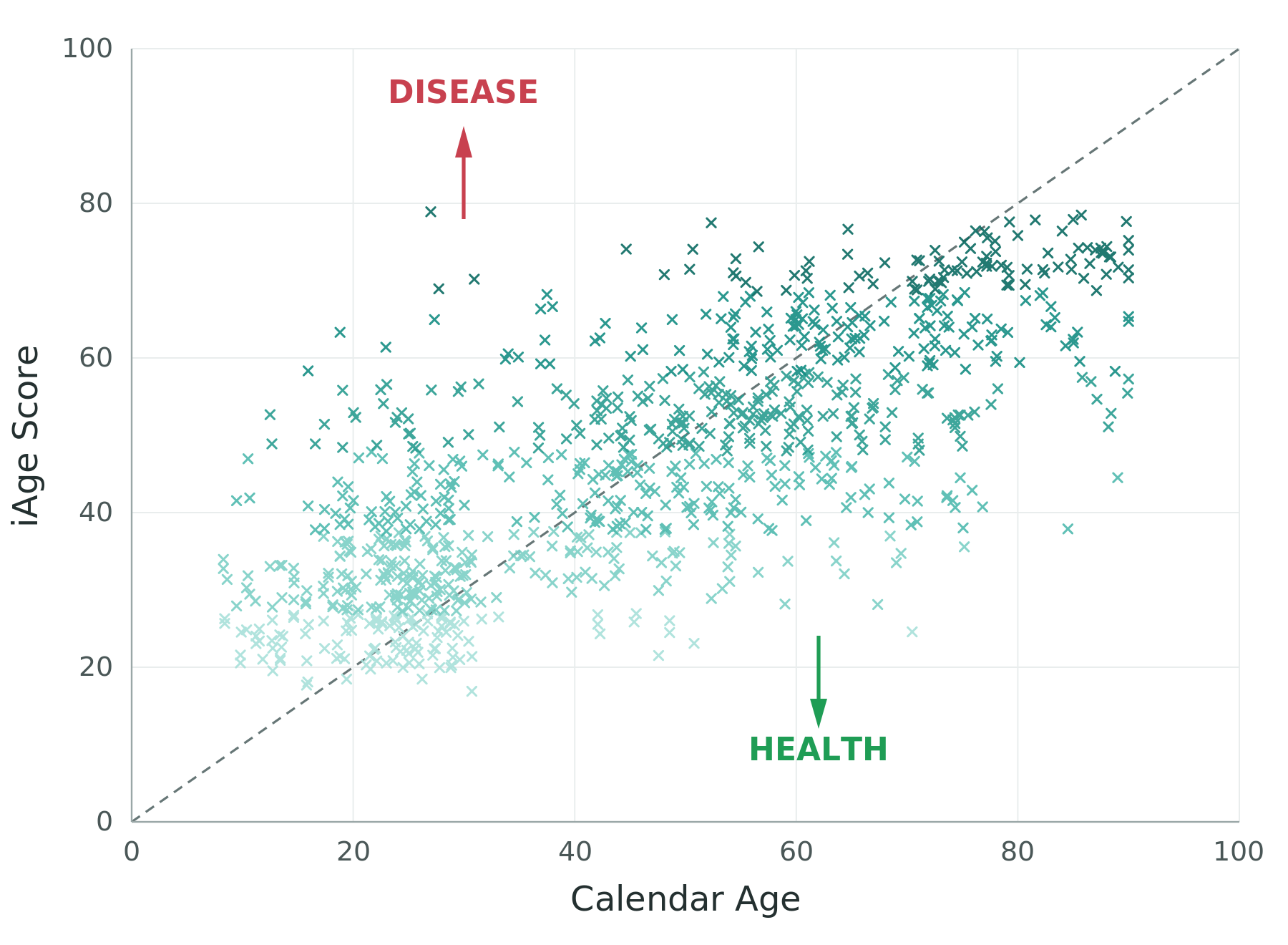
Fig. 1 iAge score against calendar age. Points above the diagonal have an iAge higher than their chronological age; points below have an iAge lower than their chronological age.
Research-grade, available today
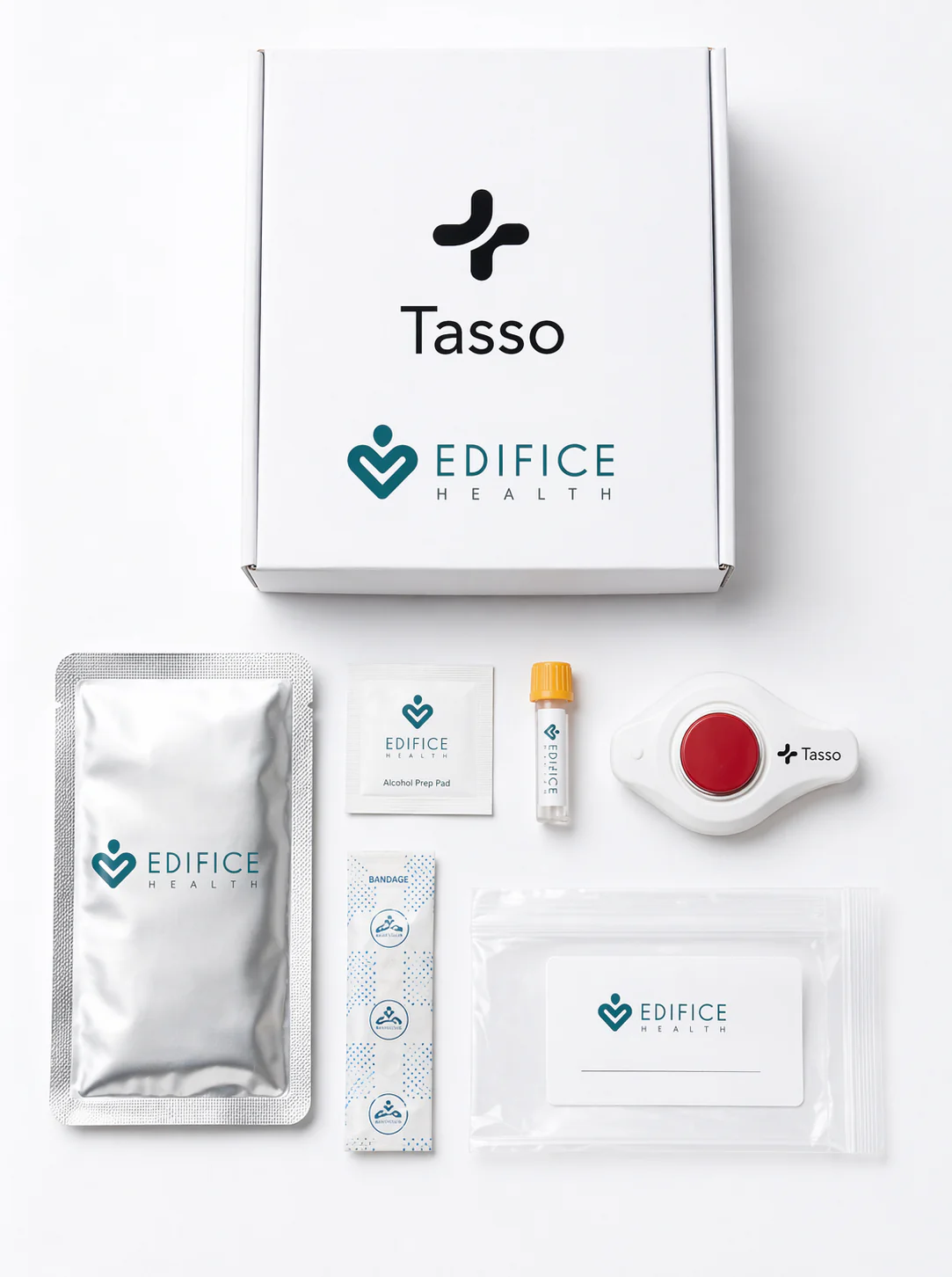
iAge is CLIA-certified and commercially available today, in both research and clinical settings. We support venous draw and five-minute at-home capillary collection, so it fits centralized and decentralized designs alike.
And it responds. In a placebo-controlled randomized trial, iAge fell measurably within two weeks in participants with elevated baseline scores.
Edifice Health serves the XPRIZE Healthspan Finals as a testing partner through 2030, and works with research groups, clinicians and trial sponsors beyond the competition.
iAge® in the real world
Since the Nature Aging paper, iAge® has been run in thousands of patients and now underpins more than twenty peer-reviewed publications. It is no longer a single-cohort result.
The work spans lifespan cohorts, intervention trials, mechanistic studies of immune dysfunction, and cancer inflammatory-age signatures. In the INSPIRE-T cohort, accelerated iAge® tracked poorer lower-extremity function and lower intrinsic capacity. Other groups have linked it to skin elasticity, diet, pain, frailty and cardiovascular risk.
The 2026 Nature Medicine consensus, developed with XPRIZE Healthspan, named iAge® one of the two strongest immune-aging measures available for clinical trials.
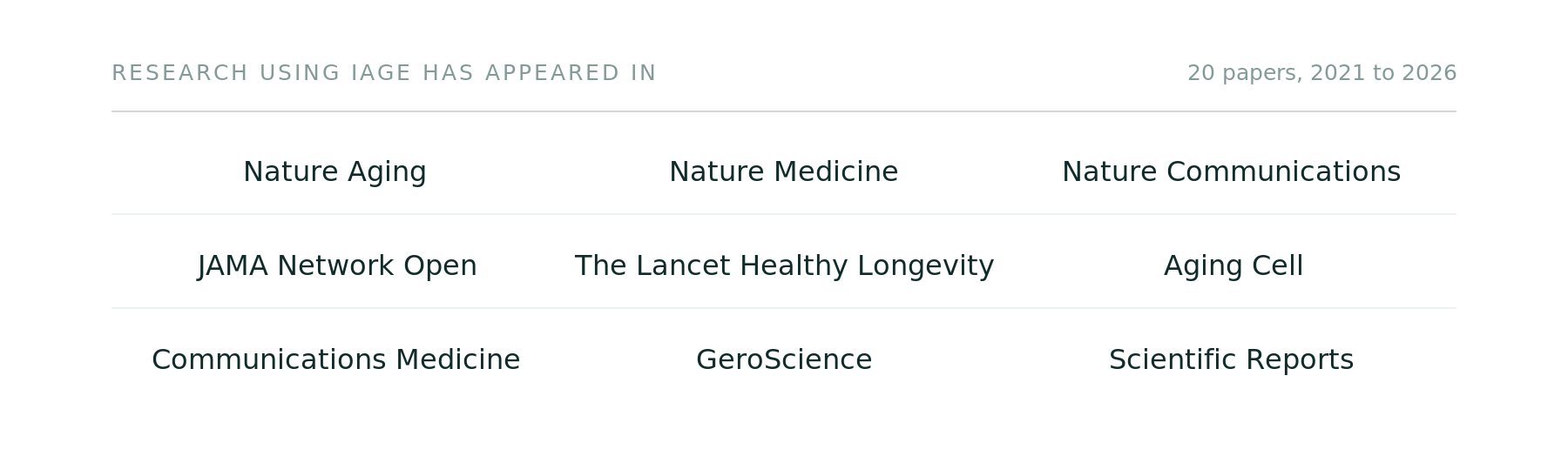
View all 20 references
- Rouch L, De Souto Barreto P, Rolland Y, et al. Accelerated epigenetic and inflammatory aging and intrinsic capacity. JAMA Network Open. 2026;9(7):e2624102.
- Cipriano A, Justice J, Poganik JR, et al. Immune aging biomarkers for clinical trials. Nature Medicine. 2026;32(7):2368–2382.
- Grande de França N, Rolland Y, Guyonnet S, et al. The role of dietary patterns on epigenetic and inflammatory aging based on the INSPIRE-T study. Communications Medicine. 2026;6:410.
- Valenzuela PL, Sánchez-Sánchez JL, Bensadoun P, et al. Cross-sectional and longitudinal associations of an inflammatory aging clock with intrinsic capacity and functional ability in older adults with physical and cognitive impairments: the COGFRAIL cohort. Journal of Gerontology: Series A. 2026;81(6):glag106.
- Bellelli F, Raffin J, Cesari M, et al. The association of pain with intrinsic capacity and the moderating role of inflammation in France. The Lancet Healthy Longevity. 2025;6(12):100798.
- Sánchez-Sánchez JL, Vellas B, Guyonnet S, et al. Biological ageing acceleration and functional capacities across the lifespan in the INSPIRE-T cohort. Journal of Cachexia, Sarcopenia and Muscle. 2025;16(4):e70046.
- Franceschi C, Olivieri F, Moskalev A, Ivanchenko M, Santoro A. Toward precision interventions and metrics of inflammaging. Nature Aging. 2025;5(8):1441–1454.
- Lu WH, Guyonnet S, Raffin J, et al. Associations of skin biomechanical properties with biological aging clocks and longitudinal changes in intrinsic capacity in adults aged 20–93. Aging Cell. 2025;24(10):e70190.
- Fuentealba M, Rouch L, Guyonnet S, et al. A blood-based epigenetic clock for intrinsic capacity predicts mortality. Nature Aging. 2025;5(7):1207–1216.
- Fuentealba M, Kiprov D, Schneider K, et al. Multi-omics analysis reveals biomarkers that contribute to biological age rejuvenation in response to therapeutic plasma exchange. Aging Cell. 2025;24(8):e70103.
- Turesson A, Koochek A, Nydahl M, et al. The associations between biological markers of aging and appetite loss across adulthood. GeroScience. 2026;48(1):859–870.
- Zhang T, Huang Y, Ji X, Wu T, Xiao P. CCL11 (eotaxin) promotes the advancement of aging-related cardiovascular diseases. Reviews in Cardiovascular Medicine. 2025;26(2):26020.
- Wu F, Du H, Overbey E, et al. Single-cell analysis identifies conserved features of immune dysfunction in simulated microgravity and spaceflight. Nature Communications. 2024;15:4795.
- Wang RZ, Zhang WS, Jiang CQ, et al. Inflammatory age and its impact on age-related health in older Chinese adults. Archives of Gerontology and Geriatrics. 2024;125:105476.
- Yan B, Liao P, Liu S, Lei P. Comprehensive pan-cancer analysis of inflammatory age-clock-related genes. Scientific Reports. 2024;14:10468.
- Khan S, Chakraborty M, Wu F, et al. B cells promote T cell immunosenescence and mammalian aging parameters. bioRxiv. 2023. Preprint.
- Baechle JJ, Chen N, Makhijani P, Winer S, Furman D, Winer DA. Chronic inflammation and the hallmarks of aging. Molecular Metabolism. 2023;74:101755.
- Dioum EHM, Schneider KL, Vigerust DJ, et al. Oats lower age-related systemic chronic inflammation (iAge) in adults at risk for cardiovascular disease. Nutrients. 2022;14(21):4471.
- Zhu L, Wang F, Huang J, et al. Inflammatory aging clock: a cancer clock to characterize patients’ subtypes and predict overall survival in glioblastoma. Frontiers in Genetics. 2022;13:925469.
- Sayed N, Huang Y, Nguyen K, et al. An inflammatory aging clock (iAge) based on deep learning tracks multimorbidity, immunosenescence, frailty and cardiovascular aging. Nature Aging. 2021;1:598–615.
Talk to us about inflammation endpoints for your study
Tell us which describes you and we will come back with specifics for your design.
Or email us directly: partnerships@edificehealth.com
XPRIZE participating team
Reserved.
Research partner
Reserved.
XPRIZE Healthspan Team Summit
Salt Lake City, 12 August 2026. Looking forward to seeing you there. Reach out to schedule time at the summit, or a call afterwards.
Not a researcher? iAge is also available directly. Visit the store
